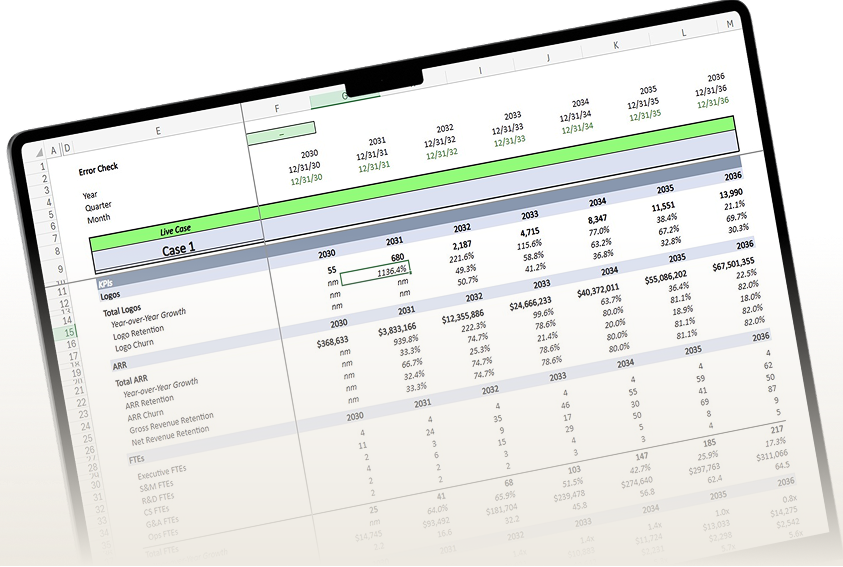

Treasury management software for startups manages where cash sits, what it earns, how fast it comes back and who can move it. Cash forecasting is a separate job: it models where cash will be.
The decision in front of you is which treasury instrument, if any, you need, and in what order. The best treasury management software for startups is the lightest tool that matches your cash balance, bank structure and approval needs.
Rho, a vendor, says an interest-bearing savings account does the job below roughly $100K of investable cash.
"Software executes. It does not own the forecast."
— Aleksandar Stojanovic, CEO & Founder at FiscallionThis guide sorts the options by category, gives you a selection table, and shows where treasury tooling stops and forecasting discipline starts.
Key takeaways
- Treasury software splits into two categories: built-in treasury products that hold and invest your cash, and enterprise treasury management systems (TMS) that connect to banks you already use.
- Compare options on access, protection structure, liquidity, yield basis, currency and payments, controls and reporting. Do not compare on headline yield alone.
- Deposits and securities are protected differently. Check which one you are buying before you move cash.
- Most startups need stage-appropriate cash tooling plus a forecast with named owners, not an enterprise system.
- Treasury tools execute. A forecast with a decision cadence determines where cash will be.
Two categories of treasury software, plus one vendor-coined third
Rho splits the market into two categories. Both answer the same question, but they do it differently.
Built-in treasury products hold and invest the cash. Rho names itself, Mercury and Brex in this class, and says they charge a management fee on invested balances.
Enterprise TMS platforms such as Kyriba, SAP and GTreasury are software layers that connect to your existing banks. Rho says they are priced by quote and built for treasury teams.
Finmo adds a third label, TMS-Lite, aimed at Series A and B startups. Finmo defines it as real-time cash visibility, dynamic forecasting from live data, global payments with approval controls and practical FX management, without requiring a treasury specialist.
Both Rho and Finmo are vendors. They authored the pages cited here and favor their own products. Treat their framing as a starting point for your own checks, not as independent evidence.
Selection criteria: seven fields that separate the options
Use these fields to compare any tool. They come from Rho's comparison and Finmo's TMS-Lite scope, so there are no scores, only questions to answer from each vendor's current terms.
| Criterion | What to check | Source basis |
|---|---|---|
| Access and minimums | Minimum balance, fee on invested balances, quote-based pricing | Rho: Rho Treasury has a $50,000 minimum; enterprise TMS is priced by quote |
| Bank and protection structure | Are you holding deposits across insured banks, or securities? | Rho: a sweep account is still a deposit; a treasury product holds securities protected by SIPC rather than FDIC |
| Liquidity | How fast cash can be recovered, and from which instrument | Rho: treasury software answers how fast cash can be recovered |
| Yield basis | 7-day SEC yield, 30-day SEC yield or no SEC yield; net or gross of fee; assumed allocation; date | Rho |
| Currency and payments | Global payments, FX management, multiple currencies | Finmo: TMS-Lite scope |
| Controls and approvals | Who can initiate and approve a payment or transfer | Finmo: global payments with approval controls |
| Reporting | Real-time cash visibility, forecasts built from live data | Finmo: TMS-Lite scope |
Two rows decide most shortlists for early-stage companies: access and protection structure. A tool you cannot qualify for, or one that holds your cash in a form you did not intend, is not a candidate.
How to compare yields honestly
Two yields on two web pages are rarely the same measurement. Rho states that yields should be compared by their basis.
- Money market funds quote a 7-day SEC yield.
- Bond funds quote a 30-day SEC yield.
- T-Bills are individual securities with no SEC yield.
Then check three more things: whether the figure is net of the program fee, what allocation the headline assumes, and the date it was measured.
Rho's own example shows why. It publishes an annual management fee of 0.60% under $2M, stepping down to 0.15% at $20M and above, with quoted yields already net of the fee. Its top-tier yield is up to 4.55% net, as of 08/03/2026. A fee-adjusted figure like that is only comparable to another product's figure if it is quoted the same way.
Yield is also a second-order decision. Define how much cash you may need in the next quarter first. Yield only matters on cash you will not need.
Three tool classes and where each fits
Built-in treasury products: fit when you have idle cash above a savings-account threshold
Rho says most startups need a built-in treasury product rather than a dedicated TMS. It says a savings account is enough below roughly $100K of investable cash and a securities-based treasury product fits above that.
Rho describes Rho Treasury as investing in 13-week U.S. T-Bills, the Morgan Stanley MULSX money market fund and a Vanguard short-term bond fund. It says the securities are SIPC-protected, up to $500K per client including $250K cash, via Apex Clearing Corp. and Interactive Brokers LLC, and are not FDIC-insured. That is Rho describing its own product, so verify it against the current terms before you act.
Mercury and Brex sit in the same class in Rho's framing. Evaluate each on its own current pages, using the seven criteria above.
TMS-Lite platforms: fit when your cash spreads across banks, currencies and entities
This is Finmo's category, and Finmo sells a TMS-Lite platform. Its profile is a lean finance team managing multiple banks, currencies and entities, growing cross-border payments, and investors asking for defensible runway forecasts.
Ask any TMS-Lite vendor what is live data and what is manual input. A forecast built from live bank data still needs someone to own the assumptions.
Enterprise TMS: fit when a treasury function already exists
Finmo says an enterprise TMS is built for large organizations with dedicated treasury teams. It says implementation can take six to eighteen months, require internal IT resources and external consultants, and carry high licensing and maintenance costs.
That is a vendor's view of a competing category, so weigh it accordingly. The fit logic still holds: an enterprise system needs a treasury team to run it. Finmo says a full TMS becomes relevant with a dedicated team and needs such as structured debt management, derivatives or multi-jurisdiction compliance.
Stay put, TMS-Lite or full TMS: a decision path
Start with your current cash position and complexity, then follow the first branch that matches.

- Roughly $100K or less of investable cash and a simple setup: an interest-bearing savings account (Rho).
- More idle cash than that: a securities-based built-in treasury product. Check minimum, fee, instrument, protection (FDIC deposits versus SIPC securities), liquidity and yield basis (Rho).
- Multiple banks, currencies and entities, growing cross-border payments, investors asking for defensible runway forecasts and a lean finance team: the TMS-Lite scope (Finmo, vendor-authored).
- A dedicated treasury team plus complex needs such as structured debt, derivatives or multi-jurisdiction compliance: an enterprise TMS (Finmo).
- Roughly split needs: TMS-Lite now, moving to a full TMS when the team and complexity justify it (Finmo).
Every branch ends at the same node: a forecast with named assumption owners and a decision cadence.
"The tool you pick changes how cash is held and moved. It does not change who decides what happens when the forecast moves."
— Aleksandar Stojanovic, CEO & Founder at FiscallionWhat treasury software does not solve
Treasury software tells you where cash is. It cannot tell you whether the assumptions behind next quarter's cash are right.
On sequencing cash tooling by stage, this is Aleksandar's first-party view (opinion, not data):
Fiscallion treats cash flow forecasting as a discipline separate from the MRR model and the income statement. It runs a direct forecast for operational liquidity and an indirect forecast for runway and capital allocation in parallel. Each assumption has a named owner, and each scenario is tied to a pre-agreed action.
Four gaps usually remain after you buy a tool:
- Forecast ownership. Someone must decide which version is the source of truth and update it on a cadence.
- Collections timing.Receivables aging should flow into the runway model as a working capital assumption. Ignoring aged receivables overstates available runway, and it usually fails from unclear ownership rather than missing tools.
- Hiring timing. A headcount plan is a time-phased decision model tied to cash and runway. Hiring costs begin before productivity and are hard to reverse.
- Decision rules. Board metrics need shared definitions, named owners and written decision rules, so a number turns into a choice.
Cash trouble in scaling SaaS companies usually comes from timing: collections lag, hiring pulled forward, deals that slip. Revenue growth is rarely the cause. A treasury product earning yield on idle cash does not fix any of those.
Fiscallion is the forecasting and CFO-judgment layer, not a treasury software vendor and not a bookkeeping firm. It works above the ledger, with reliable accounting data as the input. Each client works directly with Aleksandar Stojanovic at the CFO layer: senior partner on every engagement, not an account-manager or junior-team handoff. His FP&A leadership experience was gained through the growth of a SaaS company to €100M ARR.
The service built for this is Outsourced FP&A, Financial Modeling & Board Reporting. If you are choosing treasury tooling, bring the model, your liquidity horizon and the decision criteria you are using, and review the financial model and decision criteria with Aleksandar.
Context from corporate treasury: the same blockers show up
The PwC 2025 Global Treasury Survey, made with Treasury Management International and covering 350 treasurers, is corporate data. It is not startup data, but the forecasting blockers are instructive.

| Main obstacle to better cash forecasting | Share of respondents |
|---|---|
| Poor data quality | 76% |
| Lack of effective tools | 53% |
| Limited incentives for business units to contribute | 46% |
PwC does not state the question base on the page. Even so, the order matters: data quality and incentives outrank tooling in this survey.
PwC also reports that 38% of respondents at companies with more than $10 billion in revenue and 52% at companies with $1 billion to $10 billion manually collect and consolidate forecasting data. Satisfaction averaged 2.9 out of 5 for manual approaches and 3.3 out of 5 for integrated or system-based forecasting. Of those surveyed, 94% operate a dedicated TMS, and 22% still use offline or homegrown systems for some short-term forecasting.
For a startup, the takeaway is narrow. Systems helped satisfaction modestly, and the largest blockers were about data and ownership. Fix both before you spend on an enterprise platform.
Common mistakes and replacement moves
| Mistake | Replacement move |
|---|---|
| Shopping for yield before defining the liquidity horizon | Decide how much cash you may need in the next quarter, then invest only the remainder |
| Comparing yields without basis | Check the SEC yield type, net or gross of fee, assumed allocation and date |
| Treating a sweep account and a treasury product as the same | Confirm whether you hold deposits or securities, and which protection applies |
| Buying an enterprise TMS before a treasury function exists | Start with the lightest category your cash and complexity justify |
| Treating a treasury product as a forecasting system | Keep a separate forecast with scenarios tied to pre-agreed actions |
| No named owner for cash assumptions | Assign one owner per assumption and review them on a fixed cadence |
FAQ
How do I know if my startup needs dedicated treasury management software versus what our existing accountant or bookkeeper already handles?
Your accountant or bookkeeper records what happened. Treasury software decides where your cash sits, what it earns and who can move it. Those are different jobs.
Use Rho's threshold as a first screen: a savings account does the job below roughly $100K of investable cash. Above that, a securities-based treasury product may fit. Multiple banks, currencies or entities and cross-border payments point toward the TMS-Lite scope Finmo describes. Neither tool replaces your accountant, and neither replaces the forecast.
What is the difference between treasury execution platforms and cash forecasting tools, and which should we invest in first?
Whichever tool you buy first, accountable senior judgment on the assumptions is still what protects your runway. Treasury execution platforms hold, invest and move cash. Forecasting tools and models estimate where cash will be, based on assumptions about collections, hiring and spend.
Start with the forecast discipline: it tells you how much cash is truly idle. Then buy execution tooling that matches that balance. A forecast with named owners and a decision cadence works whether the cash sits in a savings account or a treasury product.
Can treasury management software integrate with our existing bank accounts and accounting tools, or will we need to switch providers?
It depends on the category. Rho describes enterprise TMS as software layers that connect to your existing banks. Built-in treasury products hold and invest the cash themselves, so adopting one means moving cash into that product.
The sources used here do not verify accounting-tool integrations for any specific vendor. Ask each vendor for its current list of supported banks and accounting systems before you commit.
How long does it typically take to implement treasury management software, and what should our team prepare before onboarding?
The only timeline in the sources is Finmo's claim that an enterprise TMS can take six to eighteen months to implement. It is a vendor's statement about a competing category. No sourced timeline exists here for built-in treasury products or TMS-Lite, so ask each vendor directly.
Prepare these before any demo:
- A list of bank accounts, entities and currencies
- Your liquidity horizon, meaning the cash you may need in the next quarter
- Who initiates and who approves payments and transfers
- The owner of the cash forecast and each major assumption
The decision comes down to sequence
Pick the lightest cash tool your balance and complexity justify, and verify its protection structure, yield basis and controls from the vendor's current terms. Revisit the choice when your bank, currency or entity count changes.
Then build the layer no tool provides: a forecast with owners, scenarios and written actions. That is what turns a treasury product from a place to park cash into part of a decision system.